Good Men in Cinema
Atticus Finch Edition

I ddin’t go to high school in America, so I never did a book report on To Kill a Mockingbird. I had also held off on watching the movie until I read the book, which is why I didn’t get around to either of them until 2026 when the Academy Museum had a 35mm screening of the film on what would have been Gregory Peck’s 110th Birthday.
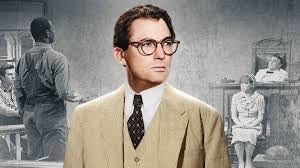
Harper Lee’s novel is set around mid 1930s in a small town in Alabama, almost a century ago during the great depression. While the book was published in 1960 with the movie coming out just two years later in 1962. I feel it’s important to state those dates as this story still feels urgently relevant in the 2020s. I can only imagine how groundbreaking and quite possibly radical it must have been at the time regarding race in America, and while that aspect of the story is ever pertinent to today, I think audiences in 2026 can also learn a lot from how this film models healthy masculinity.
Gregory Peck won an oscar for his portrayal of the iconic character Atticus Finch, and after watching the film I completely understand why characters like Finch are immortal, but I don’t understand why we rarely see men like them as much in film or in the real world.
James Gunn’s reboot of Superman in 2025 made an attempt at this with Clark Kent claiming it’s “punk rock now to trust everyone and think everyone is beautiful”, the unapollagetic sincerity was much welcomed in the cinema that Summer.
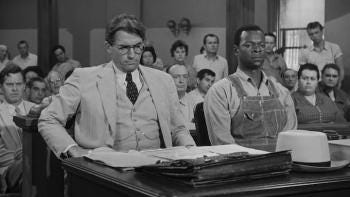
The world that the characters of To Kill a Mockingbird inhabit is incredibly harsh, confusing, unfair and full of hate. The children of the story are our window into that world and their father Atticus Finch acts a barrier and guide between them and that harsh world. As an audience member it’s heartbreaking to feel like you yourself understand the harsh realities of the world, while the father navigates these struggles with temperance.
We constantly ask ourselves - how could this man believe in a fair society and the deep down in good in people after all of the unjust things people go through, and do? The kind of things that have chipped away at the audience’s own once pure and brilliant sense of innocence.
It’s somewhat telling how people have a hard time believing a character like Atticus Finch could ever exist when the world around him is so cruel, especially when it reflects our reality so closely.
It’s tricky to even broach the ideal of healthy masculinity at this point in time when most of what we see of men in social media, politics, society and in films/TV are distorted funhouse images of male caricatures staring back at us lobbing hateful rhetoric and abuse at vulnerable members of society, bawking at those who dare to fathom empathy.
It’s those same men who arrive outside the Jailhouse with pitchforks while Atticus is sitting guard for Tom Robinson - the story’s accused. We like to think in society we’ve evolved from those angry mobs of almost a century ago, but those same men just have laptops and smartphones now instead of blunt clubs and firey torches.
Film and TV is not comepletely to blame, but it’s not surprising to think that growing up in a media landscape of anti-heroes; Tony Sopranos/Montanas and Walter Whites, would inherit a distorted mentality of what “being a man” or being a man who is tough, brave, strong or heroic, should look like.
This film shows us a different kind of male hero. One armed with unassuming strength, wisdom and intelligence. When outnumbered by an angry mob, Atticus keeps his cool and stands his ground. We know Atticus is a lawyer so we can assume he’s well educated and believes law is on his side, but there is something about his character that elevates him from good guy to hero. And it’s different to most male characters in film and TV of the past few decades. Don’t get me wrong, I love a good anti-hero as much as the next cinephile, but somewhere along the way the balance has tipped and the best examples of masculinity end up being fantastical superheroes fighting problems that don’t exist (aliens, monsters etc) -
It’s easy to be a good guy when the world is facing annihilation from an alien overlord, but where does Thor stand on segregation?
“The only thing necessary for the triumph of evil is for good men to do nothing,”
-source unknown
I’m sure there have been white-saviour arguments made against this film, but when the world is suffering at the hands of white supremacist patriarchical regimes it is always the vulnerable in society who have to organise and speak up for themselves.
It’s apathetic while males who are allies to the cause, but uncertain how to help that need to support our diverse siblings. If we stay silent we stay compliant, and that is not okay. And if being dubbed woke, or performative, or virtue signaling or white-savioury is the worst punishment white guys risk, then it’s a small price to pay for standing on the right side of history.
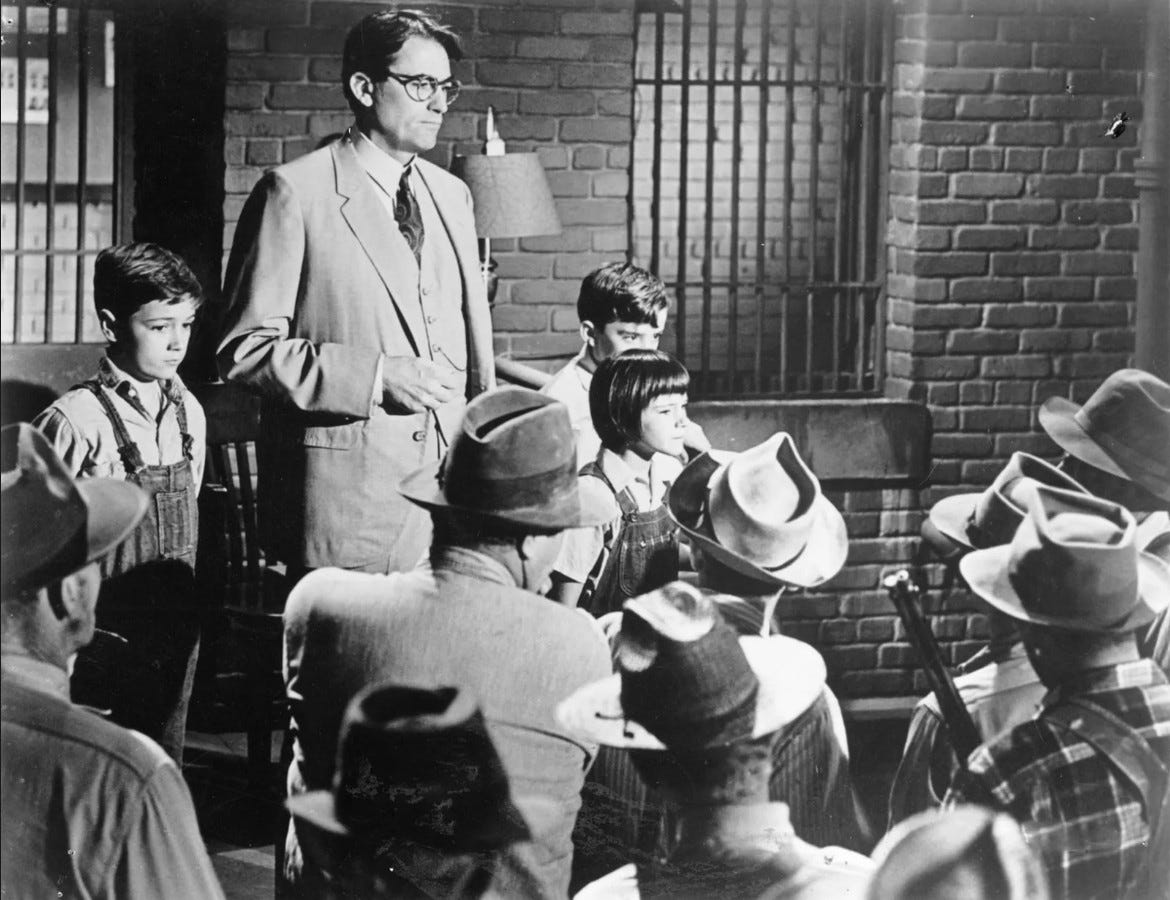
For me, there is no better portrayal of healthy masculinity in film that a character who stands up against evil non violently. Even when his own life, his own family, is being threatened. What if Atticus Finch strapped up and go on a Liam Neeson style killing spree when he is threatened? Does he seek vigilante justice or revenge? We know he’s able to step up and use a good to put down a wild dog when even the sheriff doesn’t have the stomach for it.
Isn’t is sad that the most unbelievable thing about Atticus Finch is that despite inhabitting this unjust world he claims to believe this:
“Now, gentlemen, in this country our courts are the great levelers. In our courts, all men are created equal. I'm no idealist to believe firmly in the integrity of our courts and of our jury system. That's no ideal to me. That is a living, working reality!”
How could a well educated man of experience believe that good and fairness can prevail - especially when it does not in this story - surely he must be delussional or the writer has written something too idealistic?
That is what great characters can do. Atticus represents that still living shred of hope within us. It’s that shred of hope that helps us put one foot in front of the other when world leaders are demolishing the road ahead of us. If Tony Soprano or Daniel Plainview (There Will Blood) represent the shadow part of ourselves, characters like Atticus Finch or Gunn’s Superman must represent our higher self. That untouchable streak of gold within us that cannot be corrupted by the pain of the real world.
But, like all well rounded characters, he is human. He is not perfect and he grapples with frustrations and emotions - moreso in the book - but just like the way he models the honest, true and right behaviour for his children, he shows us too how to stand up and exercise strength and restraint when our enemy spits in our face.
The creator of some of TV’s greatest characters of the 21st century Vince Gilligan himself said last year that we need to see more good guys now. It’s hard to imagine what that looks like in the film and TV landscape in 2026 while feeling authentic and impactful. Afterall, great characters are flawed, we know this. Have we perhaps focussed too much on the flaw? Created entire premises around the flaw of the character? What if it’s the world that’s flawed as in To Kill a Mockingbird, or you know… reality, maybe then it makes more sense to populate it with at least one chaotic-good guy, or gal.
Life imitates art and so on and so forth, so it’s likely that the agressive male characters of the screen in recent years are a reflection of the men we see in society. All the more reason to explore more characters like Atticus Finch. These are the kind of men we want to strive be, men with qualities we want to model for our sons, and the kind of people we want to see guiding the world in politics.